
TLIF (Fusion from the Back & Side)
For patients whose lower back pain hasn't responded to conservative treatment, TLIF is one of the most reliable surgical options available. Dr. Avery Buchholz addresses nerve compression and spinal instability at the source—not just the symptoms.

Board Certified
Neurosurgeon

15+ Years
Experience

5000+
Procedures Performed
Get In Touch
Contact us today to schedule your consultation and take the first step toward relief.
This form is intended for scheduling purposes only and is not a HIPAA-compliant form. Please avoid sharing any sensitive medical information. By submitting this form, you agree to be contacted regarding your inquiry.
What Is TLIF?
Transforaminal Lumbar Interbody Fusion (TLIF)—This is a lower back fusion surgery performed from the back or side to treat disc problems and spinal instability. It is often recommended when there is nerve compression along with back pain.
During the procedure, the surgeon removes the damaged disc, places an implant, and stabilizes the spine. Bone graft (often donated bone) is used to help the bones fuse together over time. The materials used are small and designed to work with your body, helping support the spine while it heals. Over time, your body forms a solid fusion, creating long-term stability. Imaging such as MRI and X-rays are used prior to surgery to guide treatment. The goal is to relieve pressure on the nerves and provide long-term stability. Patients with a desk job return to work typically 7 days after the surgery. If you have a more labor-intensive job, please ask your doctor when you may return.

30 Minutes

Same Day Procedure

General Anesthesia

2-6 Weeks Recovery
What This Procedure Treats
TLIF is indicated for specific structural problems of the lumbar spine — not symptoms. These are diagnoses confirmed on imaging that have failed to improve with conservative management.
01
Spondylolisthesis
A vertebra slipped forward over the one below, creating mechanical instability and nerve compression at that segment.
02
Recurrent Lumbar Disc Herniation
Re-herniation after a prior discectomy, or herniation with significant disc collapse requiring full disc removal and fusion.
03
Segmental Instability
Abnormal vertebral motion confirmed on flexion-extension X-rays that does not resolve with physical therapy or injections.
04
Severe Foraminal Stenosis
Critically narrowed nerve exit canal from collapsed disc height or bone overgrowth causing persistent radiculopathy.
05
Failed Prior Lumbar Surgery
Recurrent instability, adjacent segment breakdown, or pseudarthrosis following a prior decompression or fusion attempt.
Ready to Talk About Your Lower Back Pain?
Schedule a consultation with Dr. Avery Buchholz at Capital Spine & Pain Institute. We'll review your imaging and go from there.
Why Patients End Up Choosing TLIF
Lumbar fusion surgery isn't a first-line recommendation. Dr. Buchholz works through each patient's full clinical picture—symptoms, imaging, and treatment history—before putting surgery on the table.
Non-Surgical Options Weren't Enough
Physical therapy, chiropractic care, anti-inflammatory medications, and epidural steroid injections are all tried first. TLIF becomes relevant when those approaches have either not worked or stopped working.
Pain Is Limiting Everyday Life
Chronic lower back pain and sciatica that interfere with work, sleep, and basic activity represent a quality-of-life problem that warrants more than symptom management.
Neurological Symptoms Are Progressing
Leg weakness, foot drop, or progressive numbness are signs of active nerve damage. Waiting too long can make deficits harder to reverse. Surgical decompression can stop that progression.
Imaging Shows a Clear Structural Cause
Surgery isn't appropriate based on symptoms alone. MRI and X-rays must confirm a structural problem — a herniated disc, spondylolisthesis, or significant degeneration — that matches what the patient is experiencing.
Benefits of TLIF at Capital Spine & Pain Institute
Nerve Decompression
Removing the disc and restoring disc height takes direct pressure off the nerve roots, causing leg pain, numbness, and weakness.
Permanent Structural Correction
Injections and therapy manage symptoms. TLIF eliminates the underlying structural problem — abnormal motion at the affected level — permanently.
Less Disruption Than Older Methods
The transforaminal route requires access through only one side of the spine—less blood loss, shorter operative time, and less post-surgical discomfort.
Restored Disc Height
The interbody cage props collapsed vertebrae apart, widening nerve canals and improving lumbar alignment—two things that have a direct impact on how patients feel.
Earlier Return to Activity
Most desk-job patients are back to work within a week. Walking is encouraged from day one after surgery. Meaningful recovery happens well ahead of full fusion.
Decades of Documented Outcomes
TLIF has long-term clinical follow-up data — high fusion rates and durable pain relief documented across thousands of patients over decades.
Step-by-Step: What Happens During TLIF
Anesthesia & Positioning
General anesthesia is administered, and the patient is positioned face-down to expose the lumbar spine.
Incision & Muscle Exposure
A midline incision is made, and paraspinal muscles are retracted—not cut—to expose the target vertebrae. Fluoroscopy confirms the correct level.
Pedicle Screw Placement
Titanium screws are placed into the vertebrae above and below the disc to anchor the stabilization construct.
Disc Access & Removal
Working through the foramen on one side, a small amount of bone is removed to fully clear the damaged disc from the interspace.
Cage & Bone Graft Placement
A bone-graft-packed interbody cage is inserted to restore disc height, widen the foramen, and provide a scaffold for fusion.
Rod Fixation & Closure
Connecting rods are locked into the screws to complete stabilization. The wound is closed in layers; most patients stay one to two nights.

WHY CHOOSE US
What Sets Capital Spine & Pain Apart
Fellowship-Trained Neurosurgeon
Dr. Buchholz completed advanced fellowship training in complex spine surgery—a subspecialty expertise that goes well beyond standard neurosurgical residency.
Minimally Invasive by Default
Techniques that reduce tissue disruption and recovery time are used whenever clinically appropriate. Surgery is sized to the problem—not the other way around.
Three Convenient Locations
Falls Church, Alexandria, and Richmond, VA — expert spine care accessible without a long drive to a major medical center.
Imaging-Guided Surgical Planning
Every TLIF is planned using high-resolution MRI and X-ray. Implant sizing, approach angle, and hardware placement are all mapped out before surgery begins.
Honest Patient Evaluations
Not every back problem warrants surgery. Dr. Buchholz evaluates whether TLIF is actually the right option and explains alternatives clearly—including doing nothing.
5,000+ Procedures Performed
High-volume surgical practice produces consistent results. Patients benefit from the technical reliability and efficiency that comes with genuine experience.
What to expect week by week
Recovery varies, but here's how most patients progress.
Same Day
Go home. Rest.
Procedure done. Mild soreness at the injection site is normal. Skip driving — you'll need a ride.
24–48 Hours
Soreness fades.
Site soreness clears in a day or two. Some patients notice early pain improvement starting here.
1 Week
You should feel a difference.
Most patients see a meaningful reduction in neck and arm pain as the steroid reaches full effect.
Weeks–Months
Continued improvement.
Relief can last weeks to months. A second injection or PT can extend it further if needed.
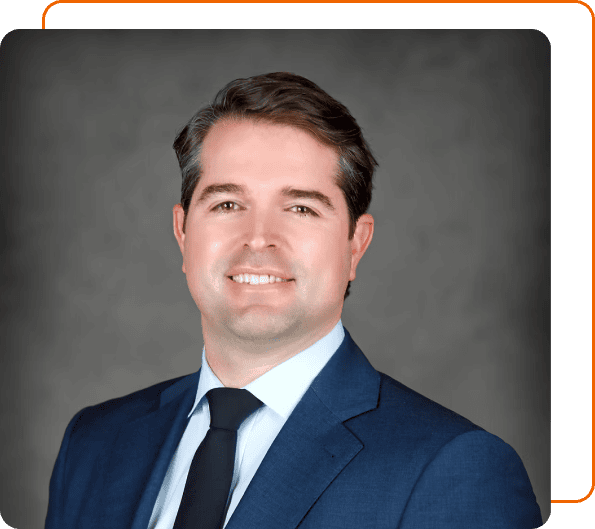
Expert Spine Surgeon
Dr. Avery L. Buchholz is a board-certified neurosurgeon with fellowship training in complex spine surgery. With over 15 years of experience and 5,000+ procedures performed, he specializes in both minimally invasive and complex surgical techniques.
His expertise spans the full spectrum of spine care, from non-surgical interventions to advanced reconstructive procedures, always prioritizing patient safety and optimal outcomes.
Frequently Asked Questions
Get answers to common questions about our practice and procedures
Am I a good candidate for TLIF surgery?
If your MRI shows a disc or spine problem and months of therapy and injections haven't helped, you likely qualify for a consultation.
How long does the TLIF procedure take?
Usually two to four hours, depending on how many levels are involved.
Will I need physical therapy after TLIF?
Yes. PT starts around week six — mostly core work to support the spine while it heals.
What is the success rate for TLIF surgery?
Fusion rates sit above 90% in most studies. Most patients see lasting relief from both back and leg pain.
How is TLIF different from a microdiscectomy?
Microdiscectomy trims the disc and leaves it in place. TLIF removes it entirely and fuses the two vertebrae—used when instability is also part of the problem.
Does TLIF permanently limit my mobility?
Not in any meaningful way. One fused level makes very little difference to how the spine moves day to day.
Take the Next Step Toward Relief
If you've had lower back pain, leg pain, or instability and nothing has held, Dr. Buchholz at Capital Spine & Pain Institute can tell you whether TLIF is the right move. Call or request an appointment below.
Our Locations
Serving patients across VA
Falls Church, VA
431 Park Ave, Falls Church, VA 22046
Open
Get In Touch
Contact us today to schedule your consultation and take the first step toward relief.

Address
6244 Little River Turnpike, Suite 101
Alexandria, VA 22312

Phone
FAX
(571) 250-5150


Office Hours
Monday - Saturday: 9:00 AM - 6:00 PM
Sunday: Closed
This form is intended for scheduling purposes only and is not a HIPAA-compliant form. Please avoid sharing any sensitive medical information.
By submitting this form, you agree to be contacted regarding your inquiry.
Follow Us