Scoliosis Pain Relief
in Northern Virginia
Scoliosis is an abnormal curvature of the spine. It is not the same as your body’s natural curve from front to back. The condition is often mild and asymptomatic, but can result in back pain and abnormal posture. Most often, a medical professional diagnoses this condition in adolescence. Treatment consists of physiotherapy, braces, and surgeries.

Board Certified
Neurosurgeon

15+ Years
Experience

5000+
Procedures Performed
Get In Touch
Contact us today to schedule your consultation and take the first step toward relief.
This form is intended for scheduling purposes only and is not a HIPAA-compliant form. Please avoid sharing any sensitive medical information. By submitting this form, you agree to be contacted regarding your inquiry.
What Is Scoliosis?
"Scoliosis" means the spine curves sideways—usually in a C or S shape—rather than running straight. It shows up most in kids during their teen growth years, when bones are changing fast, and parents aren't always looking for it.
How serious it is varies widely. A small curve might need nothing more than a check-up every few months. A large one can put pressure on the lungs and heart. Dr. Buchholz reviews every patient's imaging himself before recommending anything—he's not running patients through a standard script.
- Cobb Angle Measurement
- Advanced Imaging
- Personalized Plans
- All Ages Treated

Minimally Invasive

Advanced Technology

Same-Day Procedures

2-6 Weeks Recovery
Symptoms of Scoliosis
Scoliosis doesn't always make itself obvious, especially in the early stages. Depending on where the curve sits and how much it has progressed, symptoms can range from subtle postural changes to noticeable pain and nerve-related complaints.
Uneven Shoulders or Hips
One shoulder or hip riding noticeably higher than the other is often the first thing a parent or school screener notices.
Prominent Shoulder Blade
One shoulder blade protrudes further than the other, especially when leaning forward or wearing fitted clothing.
Leg Pain or Numbness
In cases where the curve compresses nerve roots, pain, tingling, or weakness can travel into the legs, similar in feel to sciatica.
Persistent Back Pain
A dull, recurring ache in the mid- or lower back—more common in adults than children and easy to mistake for ordinary strain.
Muscle Fatigue Along the Spine
The muscles on either side of the spine work unevenly, leading to a tired, tight feeling after standing or sitting for longer periods.
Rib Cage Asymmetry
One side of the rib cage appears more raised or more forward than the other, a sign of the rotational component that accompanies most scoliotic curves.
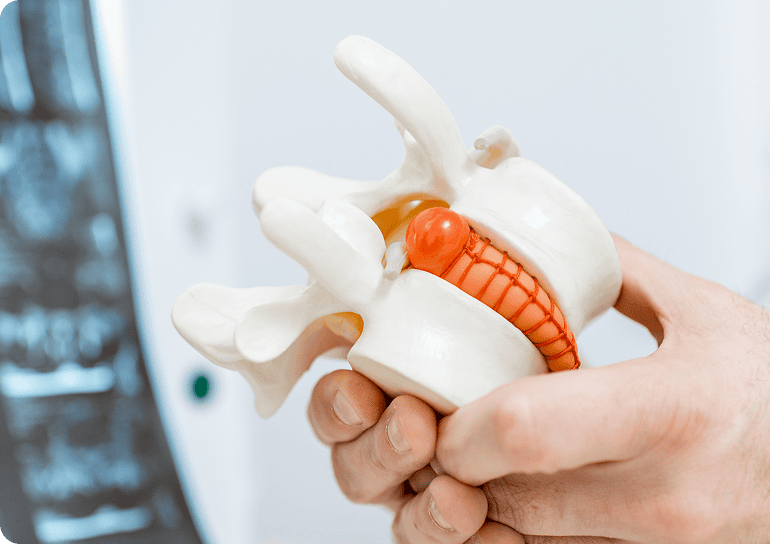
How It Develops

Early Spinal Curve
A small sideways curve begins to form in the spine, often during periods of rapid growth. In many cases, the exact cause remains unknown.

Uneven Growth & Loading
As the curve develops, uneven pressure may affect the vertebrae and discs, contributing to asymmetrical growth and gradual progression.

Vertebral Rotation
The vertebrae begin to rotate as the curve deepens. This can lead to uneven shoulders, a prominent rib hump, and noticeable postural changes.

Compensatory Changes
To maintain balance, the spine may develop additional curves while surrounding muscles adapt to the altered alignment, potentially worsening the deformity over time.
Take the First Step Toward Relief
Get expert advice based on your condition by visiting today.
Causes and Types of Scoliosis
Scoliosis isn't one thing—the cause, where the curve sits, and the patient's age all lead to different diagnoses and very different treatment paths.
Idiopathic Scoliosis
No clear cause—though genetics seems to matter. This is the diagnosis when everything else has been ruled out, and it covers about 80% of all cases.
Adolescent Idiopathic Scoliosis
Shows up between ages 10 and 18, usually during a growth spurt. More common in girls. The most frequently diagnosed type is the one most families are dealing with when they first come in.
Congenital Scoliosis
The spine formed abnormally before birth—with extra vertebrae, partially developed ones, or ones that fused. The curve becomes more noticeable as the child grows.
Neuromuscular Scoliosis
Linked to conditions like cerebral palsy or muscular dystrophy, where muscle weakness affects how the spine is supported. These curves tend to progress faster and become more severe than idiopathic forms.
Degenerative Scoliosis
Happens in adults, usually after 50, as discs and joints wear unevenly over time. Often shows up alongside spinal stenosis and is one of the more common reasons older adults come in with back and leg pain.
Adult Scoliosis
Covers both curves that developed in adulthood and curves from teenage years that have become more symptomatic over time. In adults, the main focus shifts to managing pain and keeping daily life functional.
Pediatric Scoliosis
Broken into infantile (0–3), juvenile (3–10), and adolescent stages. Because the skeleton is still developing, progression risk is higher — but so are the treatment options available before growth plates close.
Thoracic Scoliosis
A curve in the midback that involves the rib cage. The most visible type—you can often see the rib prominence when someone bends forward. Severe cases can restrict how fully the lungs expand.
WHY CHOOSE US
Capital Spine & Pain Institute
Scoliosis isn't a condition you see once and discharge. It needs someone who knows the full history — the earlier imaging, what was tried, what worked, what didn't. Dr. Buchholz handles cases from the first visit through long-term follow-up, so nothing falls through the cracks.
Treatment Built Around You
Curve angle is one data point. Age, what's causing symptoms, and what you're hoping to get back to—all of it shapes the plan. No defaults.
Current Technology
Intraoperative imaging, neuromonitoring, and modern instrumentation. These aren't extras — they're how Dr. Buchholz operates.
Dr. Avery L. Buchholz
Fellowship trained in spine deformity with 15+ years of experience and 5,000+ procedures. He reviews every case himself, no handoffs to a resident before you've even spoken to him.
Minimally Invasive When It Fits
Dr. Buchholz uses smaller incision approaches when anatomy and the curve make them a good fit — not as a selling point, but because they reduce recovery time.
Everything Under One Roof
Observation, bracing, therapy, pain management, and surgery — all coordinated by the same surgeon who knows your history.
What to Expect
Right After Surgery
Most patients stay one to four days in the hospital. Minimally invasive cases often go home sooner. Getting up and moving the day after surgery isn't optional — early movement genuinely reduces complications and speeds things along.
The First Several Months
Light activity and desk work are usually back on the table within four to six weeks. Physical work takes longer — three to six months is realistic. Structured rehab starts once healing allows and makes a real difference in long-term results.
Kids vs. Adults
Younger patients bounce back faster. Adults having multi-level correction face a longer road, but people who needed surgery and got it done well typically see gains that stick—functional improvement that's worth the recovery time.
Scoliosis Treatment
There's no one-size-fits-all here. Curve type, how severe it is, the patient's age, whether the skeleton is still growing, and what symptoms are actually present all factor into what makes sense. Dr. Buchholz builds the plan around those specifics.
Non-Surgical
For most patients with curves under 45 degrees, non-surgical options are the starting point. The goal is slowing or stopping progression, keeping pain manageable, and protecting function—without jumping straight to the operating room.
1. Observation and Monitoring
For curves under 20–25 degrees, watching and waiting is often the right call. Regular X-rays track whether anything is changing. Catching movement early keeps more treatment options on the table.
2. Scoliosis Physical Therapy
Strengthening the muscles along the spine helps with posture and cuts down on pain. It works best alongside bracing or as part of recovery after surgery—not as a standalone fix for a progressing curve.
3. Scoliosis Exercises & the Schroth Method
The Schroth method is a specific exercise approach — not generic back stretches — that addresses the curve's rotation alongside the sideways bend, using controlled breathing and muscle activation. It's backed by more research than most non-surgical options for slowing progression in adolescents.
4. Scoliosis Bracing
For kids still growing with curves in the 25–45 degree range, a brace worn 16–23 hours a day applies pressure that slows how fast the curve moves. Newer designs are lower profile and easier to wear consistently, which matters a lot for results.
5. Scoliosis Pain Management
In adults, managing pain often becomes the priority while the structural picture is being assessed. That can mean anti-inflammatories, steroid injections, nerve blocks, or facet injections—whatever gives enough relief to make daily life workable.
6. Scoliosis Rehabilitation
A structured plan combining therapy, exercises, and adjustments to daily activity. Essential after surgery — and genuinely useful for patients managing things without it, if they stick with it long term.
Surgical
Surgery becomes a real consideration when curves exceed 45–50 degrees, when conservative treatment hasn't held the line, or when there's nerve compression affecting how someone feels and functions. Dr. Buchholz uses minimally invasive approaches where anatomy allows—and doesn't pretend they're the right fit for every case.
1. Spinal Fusion Surgery
The most established surgical option—rods, screws, and bone graft—holds the corrected spine in place while vertebrae fuse over time. It stops the curve from progressing further and has decades of outcomes data behind it.
2. Vertebral Body Tethering
An option for certain adolescents who are still growing. A flexible cord attached to the outer side of the curve uses ongoing growth to gradually pull the spine straighter—without locking the vertebrae in place permanently. It's not right for everyone, but for the right patient, it preserves a lot of spinal motion.
3. Minimally Invasive Scoliosis Surgery
Smaller incisions, less muscle disruption, less blood loss, faster recovery. When the curve and anatomy are suitable, Dr. Buchholz takes this route—not because it sounds better, but because the outcome data support it for the right cases.
4. Scoliosis Correction Surgery for Adults
Adults often have stenosis and nerve compression layered on top of the curve. Dr. Buchholz typically combines decompression and fusion in a single procedure, addressing the mechanical and neurological problems at the same time rather than staging them.
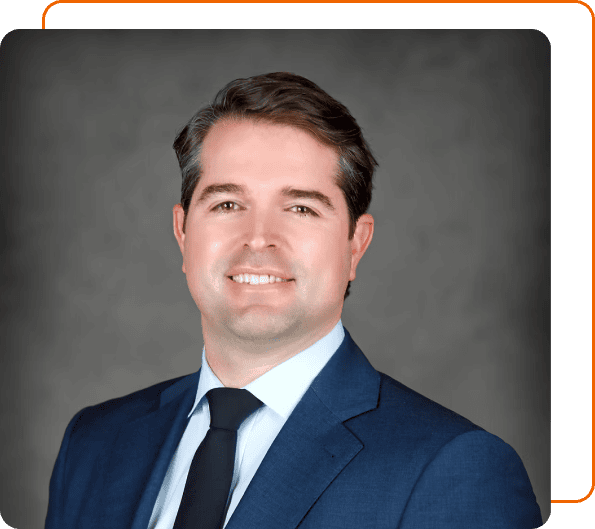
Expert Spine Surgeon
Dr. Avery L. Buchholz is a board-certified neurosurgeon with fellowship training in complex spine surgery. With over 15 years of experience and 5,000+ procedures performed, he specializes in both minimally invasive and complex surgical techniques.
His expertise spans the full spectrum of spine care, from non-surgical interventions to advanced reconstructive procedures, always prioritizing patient safety and optimal outcomes.
Board-Certified Neurosurgeon
Advanced training in complex spine surgery
5,000+ procedures performed
Minimally invasive & advanced surgical specialist
Frequently Asked Questions
Get answers to common questions about our practice and procedures
What is scoliosis?
The spine curves sideways—it looks like a C or S on an X-ray instead of running straight down.
What causes scoliosis?
Nobody really knows in most cases. Genetics plays a part. Sometimes it's a birth defect or a nerve condition like cerebral palsy.
What are the signs?
One shoulder is higher than the other. Clothes never hang right. A hump appears when you bend forward.
How is it diagnosed?
Bend forward; the doctor checks your back. Then X-rays show the exact curve angle.
Does it get worse over time?
It can. Kids are most at risk during growth spurts. After 50, worn discs can make things shift again.
Best treatment for kids?
Small curve — just watch it. Bigger curve—brace, most of the day. Over 45 degrees—surgery talk starts.
How long is the recovery after surgery?
Walking the next day. Desk job in a month. Heavy work for three to six months. Full fusion takes about a year.
Our Locations
Serving patients across VA
Falls Church, VA
431 Park Ave, Falls Church, VA 22046
Open
Get In Touch
Contact us today to schedule your consultation and take the first step toward relief.

Address
6244 Little River Turnpike, Suite 101
Alexandria, VA 22312

Phone
FAX
(571) 250-5150


Office Hours
Monday - Saturday: 9:00 AM - 6:00 PM
Sunday: Closed
This form is intended for scheduling purposes only and is not a HIPAA-compliant form. Please avoid sharing any sensitive medical information.
By submitting this form, you agree to be contacted regarding your inquiry.
Follow Us