
ALIF (Fusion from the Front)
A lower back fusion surgery that reaches the spine through the front of the body—giving the surgeon better disc access, less muscle disruption, and a cleaner path to stability.

Board Certified
Neurosurgeon

15+ Years
Experience

5000+
Procedures Performed
Get In Touch
Contact us today to schedule your consultation and take the first step toward relief.
This form is intended for scheduling purposes only and is not a HIPAA-compliant form. Please avoid sharing any sensitive medical information. By submitting this form, you agree to be contacted regarding your inquiry.
About the Procedure
What Is ALIF (Fusion from the Front)?
This is a lower back fusion surgery performed through the front of the body. It is used to treat disc problems and instability in the spine that may be causing back or leg pain.
During the procedure, the damaged disc is removed and replaced with an implant, and the spine is stabilized to allow the bones to heal together. Bone graft (often donated bone) is used to help the fusion process. The materials used are small and designed to support your spine while your body heals and creates its own stability over time. Imaging studies such as MRI and X-rays are used prior to planning the surgery.
The goal is to restore stability, relieve pain, and improve function. The procedure takes approximately 60 minutes, and you typically go home the same day. Patients with a desk job return to work typically 7 days after the surgery. If you have a more labor-intensive job, please ask your doctor when you may return.

30 Minutes

Same Day Procedure

General Anesthesia

2-6 Weeks Recovery
What This Treats
01
Chronic Lower Back Pain
Ongoing low back pain from a worn or collapsed disc that hasn't improved with conservative treatment
02
Leg Pain & Sciatica
Radiating pain down the leg caused by disc collapse narrowing the space where nerve roots exit
03
Numbness & Tingling in the Legs
Sensory changes in the leg, foot, or toes from a compressed lumbar nerve root
04
Leg Weakness
Muscle weakness from nerve compression at the disc level—difficulty walking, standing, or climbing stairs
05
Stiffness & Limited Mobility
Reduced range of motion and morning stiffness caused by a degenerated disc losing its normal function
06
Pain After Prolonged Sitting or Driving
A hallmark symptom of disc degeneration is low back pain that builds up with sitting and eases with movement
When Is ALIF the Right Choice?
Most patients arrive at ALIF surgery after months — sometimes years — of conservative care that didn't hold. That's actually appropriate. Surgery isn't where you start. It's where you go when the disc itself is the structural problem and nothing short of addressing that structure is going to solve it.
The key factor is disc-level instability or significant disc degeneration. If imaging shows a disc that has collapsed, is causing the vertebrae to move abnormally, or is leading to nerve compression that isn't resolving, fusion becomes a reasonable — and often necessary — step.
What ALIF offers specifically is access. The front of the spine at L4-L5 and L5-S1 is directly behind the abdominal cavity. Coming in anteriorly avoids the muscle and scar tissue on the back, gives a wider disc space to work with, and allows for a cage placement that restores disc height more reliably. That disc height restoration is important: it opens up the foramen where the nerve roots travel, which is often what relieves the leg pain.
Not everyone is a candidate — vascular anatomy, prior abdominal surgeries, and bone quality all factor in. Dr. Buchholz reviews each case individually before recommending ALIF.
Why Capital Spine & Pain Institute
A Neurosurgeon Who Does This — Not Someone Who Dabbles
Dr. Buchholz is fellowship-trained in complex spine surgery and has performed this procedure hundreds of times. ALIF requires specific vascular and structural experience. It's not a first-year operation.
Surgery Only When It's Genuinely the Right Call
We don't push people toward surgery. If your imaging and symptoms suggest you'd do just as well with a non-surgical approach, that's what you'll hear. ALIF is recommended when it's the right structural answer — not as a default.
Pre-Op Planning That Actually Matters
Every ALIF is planned off your specific MRI and X-rays. Implant sizing, approach planning, and vascular anatomy are reviewed before you arrive in the OR. Nothing is improvised.
Real Post-Op Support, Not a Handoff
Recovery from lumbar fusion surgery requires real follow-up—imaging, physical therapy coordination, and clinical check-ins. You'll have access to Dr. Buchholz and his team throughout.
Falls Church, Alexandria, and Richmond
Capital Spine & Pain Institute offers expert spine care with Dr. Avery Buchholz, a trusted spine surgeon and specialist in Falls Church, Alexandria & Richmond, VA—three locations across Virginia for your convenience.
Honest Conversations, Not Medical Jargon
You'll understand your diagnosis, your options, and what surgery actually involves before you make any decision. That's just how we think it should work.
Key Benefits
Larger Implant Footprint
Full disc access means a bigger cage, better bone contact, and a more reliable fusion.
Lordosis Restoration
The anterior approach is better at restoring the natural lumbar curve — important for long-term posture and load distribution.
No Back Muscle Disruption
Posterior muscles and ligaments are untouched. That means less muscle pain and a faster recovery baseline.
Disc Height Restored
Restoring height opens up the foramina—the nerve root exits. Often this is what resolves the leg pain.
Same-Day Discharge
Most patients go home the day of surgery. This isn't a procedure that requires a hospital stay.
7-Day Desk Return
Patients with desk jobs are typically back to work within a week of surgery.
How the ALIF Procedure Works
Pre-Op Imaging Review
MRI and X-rays taken before surgery map out the disc anatomy, vascular structures, and exact levels being fused. Nothing about this surgery is improvised on the day.
General Anesthesia
You're fully asleep. The procedure involves working near major blood vessels, so general anesthesia is standard. A vascular surgeon may assist with vessel retraction at some centers.
Anterior Incision
A small incision is made in the lower abdomen. The abdominal muscles aren't cut — they're moved aside. The approach is retroperitoneal, meaning the bowel is not disturbed.
Disc Removal
The damaged disc is removed completely, along with any cartilage on the endplates. The disc space is cleaned out to prepare for the implant and bone graft.
Implant & Bone Graft Placement
A structural cage—sized specifically to restore the disc height at that level—is packed with bone graft (often donor bone) and placed into the disc space. This is what the vertebrae will eventually fuse around.
Closure & Same-Day Discharge
The incision is closed in layers. Most patients are discharged the same day. You'll need a driver home, and a follow-up plan will be in place before you leave.

Ready to Find Out if ALIF Is Right for You?
A consultation with Dr. Buchholz takes about 30 minutes. You'll leave with a clear picture of your diagnosis and an honest recommendation—not a sales pitch.
What to expect week by week
Recovery varies, but here's how most patients progress.
Same Day
Go home. Rest.
Procedure done. Mild soreness at the injection site is normal. Skip driving — you'll need a ride.
24–48 Hours
Soreness fades.
Site soreness clears in a day or two. Some patients notice early pain improvement starting here.
1 Week
You should feel a difference.
Most patients see a meaningful reduction in neck and arm pain as the steroid reaches full effect.
Weeks–Months
Continued improvement.
Relief can last weeks to months. A second injection or PT can extend it further if needed.
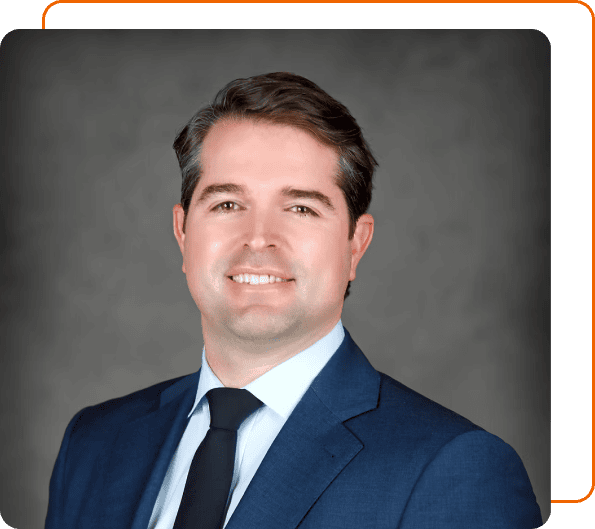
Expert Spine Surgeon
Dr. Avery L. Buchholz is a board-certified neurosurgeon with fellowship training in complex spine surgery. With over 15 years of experience and 5,000+ procedures performed, he specializes in both minimally invasive and complex surgical techniques.
His expertise spans the full spectrum of spine care, from non-surgical interventions to advanced reconstructive procedures, always prioritizing patient safety and optimal outcomes.
Frequently Asked Questions
Get answers to common questions about our practice and procedures
What does "fusion from the front" actually mean?
The surgeon reaches your lower spine through a small abdominal incision instead of cutting through your back muscles. The disc is accessed directly from the front.
Am I a candidate for ALIF surgery?
Bring your MRI. If you've already done physical therapy, injections, and nothing has stuck, that's usually where this conversation starts. Dr. Buchholz will tell you straight whether this makes sense for your situation.
How long does ALIF surgery take?
The surgery itself is about 60 minutes. You'll be at the facility a few hours total, and you go home the same day.
Will I feel pain after the surgery?
Yes, some. The incision site will be sore for a few days. But because your back muscles are never cut, most patients feel better than they expected coming out of a lumbar procedure.
When can I go back to work?
Desk work — around 7 days. If your job is physical, that's a conversation to have directly with Dr. Buchholz based on exactly what you do day to day.
What is the bone graft made of?
Usually donated bone from a tissue bank is cleaned, processed, and safe. It gets packed into the cage that replaces your disc, and your body slowly fuses around it over the next several months.
How long until the fusion is solid?
The implant holds things stable right away. The actual bone fusion — where your vertebrae grow together — typically shows up solid on imaging around the 3 to 6 month mark.
What are the risks of ALIF surgery?
Bleeding, infection, and nerve injury are possible — rare, but real. Male patients should specifically ask about retrograde ejaculation risk at L5-S1. It doesn't get mentioned enough, and it should be part of your pre-op conversation.
Will I need posterior hardware (screws) as well?
Depends on your imaging. Single-level, stable cases often don't. If there's significant slippage or more than one level involved, screws may be added in the same surgery to lock things down better.
Is ALIF covered by insurance?
Usually yes, if you have a documented diagnosis and can show you've already tried conservative treatment without success. We handle the prior authorization — you don't have to figure that part out yourself.
Our Locations
Serving patients across VA
Falls Church, VA
431 Park Ave, Falls Church, VA 22046
Open
Get In Touch
Contact us today to schedule your consultation and take the first step toward relief.

Address
6244 Little River Turnpike, Suite 101
Alexandria, VA 22312

Phone
FAX
(571) 250-5150


Office Hours
Monday - Saturday: 9:00 AM - 6:00 PM
Sunday: Closed
This form is intended for scheduling purposes only and is not a HIPAA-compliant form. Please avoid sharing any sensitive medical information.
By submitting this form, you agree to be contacted regarding your inquiry.
Follow Us