
Spine
Injections
A spine injection places medication directly into a specific area of the spine. Depending on your diagnosis, this can help reduce inflammation, calm a compressed nerve, or confirm the exact source of your pain.
Injections are not a cure. But for many patients—especially those who have not found enough relief from medication, physical therapy, or rest—they can provide meaningful relief and help avoid surgery.

Board Certified
Neurosurgeon

15+ Years
Experience

5000+
Procedures Performed
Get In Touch
Contact us today to schedule your consultation and take the first step toward relief.
This form is intended for scheduling purposes only and is not a HIPAA-compliant form. Please avoid sharing any sensitive medical information. By submitting this form, you agree to be contacted regarding your inquiry.
What Are Spine Injections?
Spinal injections target specific areas in or around the spine to deliver medication. Spinal injections most commonly deliver a local anesthetic, a corticosteroid, or both.
Spinal injections can have multiple functions. For example, spinal injections can be used diagnostically or therapeutically.
A diagnostically used spinal injection is more concerned with the immediate effect of pain relief and more focused on the information it provides regarding the source of pain and how to further the treatment plan.
Therapeutically used spinal injections typically provide relief that helps reduce inflammation of a compressed nerve. The relief of nerve compression can be sustained over a significant amount of time.
Injection patients typically experience other treatments beyond the injectables to further relieve pain, such as physical therapy and activity modifications.

20+ Procedures

Minimally Invasive

Insurance Accepted

Cash Pay Accepted

Patient-Focused Care
How the Procedure Works
All spinal injections at Capital Spine and Pain Institute are performed under image guidance. Here is what to expect:
• You are positioned on the procedure table. The injection site is cleaned and numbed with a local anesthetic.
• Using fluoroscopy (live X-ray) or ultrasound, the physician guides the needle to the target location.
• A contrast dye is injected first to confirm correct needle placement. The medication is only delivered once accurate positioning is verified.
• The procedure typically takes 15 to 30 minutes.
• You rest briefly afterward and go home the same day. You should not drive yourself.
Most patients return to light activity within 24 hours. Strenuous exercise is avoided for 1 to 2 days.
At Capital Spine and Pain Institute, all spinal injections are performed using image guidance (fluoroscopy or ultrasound) to ensure accurate needle placement. Procedures are done in-office and take 15 to 30 minutes. No hospital stay is required.
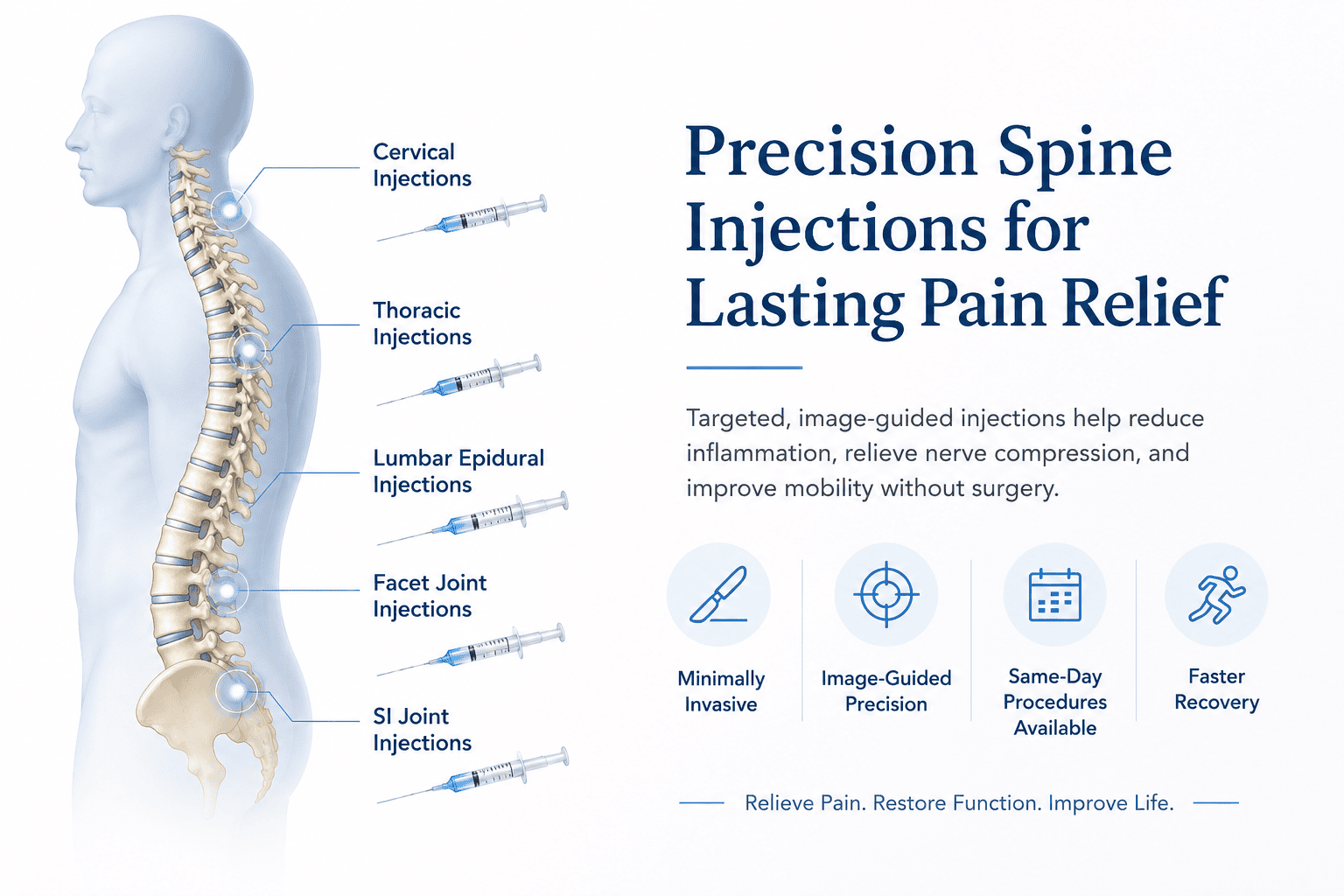
Types of Spine Injections We Offer
Conditions We Treat
We diagnose and treat a wide range of spine and nerve-related conditions using
advanced, personalized care.

Herniated Disc
Bulging or ruptured disc causing nerve compression and pain.
Sciatica
Pain radiating along the sciatic nerve, typically affecting one side of the body.
Spine Trauma
Injuries to the spine that may affect stability, movement, or nerve function.
Degenerative Spine Conditions
Age-related wear and tear of the spine leading to pain, stiffness, and reduced mobility.
Complex Spine Disorders
Advanced or multi-level spine conditions requiring specialized evaluation and treatment.
Neck, Mid & Lower Back Pain
Common spine-related pain affecting different regions of the back and limiting daily activity.
Scoliosis
Abnormal curvature of the spine that can affect posture, balance, and comfort.
Cervicogenic Headaches
Headaches caused by issues in the neck or cervical spine.
Carpal Tunnel Syndrome
Compression of a nerve in the wrist causing numbness, tingling, and weakness in the hand.
Risks and Considerations
Spinal injections are generally safe when performed by a trained specialist using image guidance. Complications are uncommon but possible. Risks include:
• Temporary soreness or increased pain at the injection site
• Bleeding
• Infection
• Headache
• Nerve irritation
• Rare risk of nerve injury
Steroid-specific side effects can include facial flushing, temporary increase in blood sugar (relevant for diabetic patients), mild nausea, and disrupted sleep for a day or two.
Some patients are not candidates for spinal injections, including those with an active infection at the injection site, a bleeding disorder, uncontrolled diabetes or blood pressure, or a known allergy to contrast dye, anesthetic, or steroids. These factors are reviewed during your consultation.
Are You a Candidate?
A spine injection may be appropriate if:
• You have neck or back pain that has lasted more than a few weeks
• The pain travels into your arm or leg, or is accompanied by numbness or tingling
• Conservative treatments—physical therapy, oral medications, rest—have not provided enough relief
• Imaging shows a herniated disc, stenosis, or facet joint degeneration consistent with your symptoms
• You want to explore non-surgical options before considering spine surgery
Not everyone with back pain needs an injection. The decision is based on a full clinical evaluation. Our physicians will review your imaging and history and give you a direct recommendation—including if they believe an injection is unlikely to help.
About Capital Spine and Pain Institute
Capital Spine and Pain Institute specializes in minimally invasive treatment for spine-related pain. Our physicians are board-certified in pain management and spine care, with subspecialty training in interventional procedures.
• All injections are performed with fluoroscopy or ultrasound image guidance
• Full range of cervical and lumbar injection options available
• In-office procedures — no hospital admission required
• Individualized treatment plans based on diagnosis, imaging, and patient goals
• Focus on non-surgical management whenever clinically appropriate
• Transparent communication — we explain findings and options clearly at every visit
If you have seen multiple providers without a clear answer about what is causing your pain, a consultation at Capital Spine and Pain Institute can help clarify your diagnosis and your options.

Expert Spine Surgeon
Dr. Avery L. Buchholz is a board-certified neurosurgeon with fellowship training in complex spine surgery. With over 15 years of experience and 5,000+ procedures performed, he specializes in both minimally invasive and complex surgical techniques.
His expertise spans the full spectrum of spine care, from non-surgical interventions to advanced reconstructive procedures, always prioritizing patient safety and optimal outcomes.
Frequently Asked Questions
Are spinal injections painful?
The skin and tissue where the injection will occur are numbed prior to the procedure. Patients report feeling more of a pressure sensation than anything else. Soreness at the injection site is common and may last one to two days.
What is the duration of the relief?
The duration of relief depends on the injection type. Relief from an epidural steroid injection may last several weeks to several months. Radiofrequency ablation may provide relief for 9 to 18 months. Relief from a medial branch block may not be as long and is often used more for a diagnostic purpose.
What limitations are there on the number of injections?
Regarding epidural steroid injections, most physicians limit the number of injections to three or four per year. Because of the intended purpose, limitations for diagnostic blocks vary. An appropriate treatment plan, based on your response and designed to meet your goals, will be discussed by your physician.
Is there any downtime?
Most patients go home about one hour after the procedure. Patients are encouraged to return to their normal daily activities the following day. Patients need to avoid strenuous activity and driving for the remainder of the day. Activity restrictions are beyond the first 24 to 48 hours for most injections.
When is relief experienced?
The anesthetic used in the injection may provide relief very soon after the procedure and last only a short time. The steroid may take three to seven days to provide relief. Some patients report improvement in symptoms and relief of pain within two weeks. If there is no change after two to three weeks, that information will assist in determining the next best step.
Will you need surgery after injections?
Many individuals do not need surgery after getting injections. For many individuals, injections mean they do not need surgery. For some individuals, injections mean temporary pain relief while they consider more permanent options. After injections, we evaluate other methods of pain relief, including the consideration of surgery.
Are spine injections paid for by insurance?
The majority of spine injections offered by the key insurance companies and by Medicare are covered, provided that they meet the criteria for medical necessity. We work to make sure the injections are covered before and during your procedure. The amount paid for spine injections depends on the insurance plan.
Our Locations
Serving patients across VA
Falls Church, VA
431 Park Ave, Falls Church, VA 22046
Open
Get In Touch
Contact us today to schedule your consultation and take the first step toward relief.

Address
6244 Little River Turnpike, Suite 101
Alexandria, VA 22312

Phone
FAX
(571) 250-5150


Office Hours
Monday - Saturday: 9:00 AM - 6:00 PM
Sunday: Closed
This form is intended for scheduling purposes only and is not a HIPAA-compliant form. Please avoid sharing any sensitive medical information.
By submitting this form, you agree to be contacted regarding your inquiry.
Follow Us