
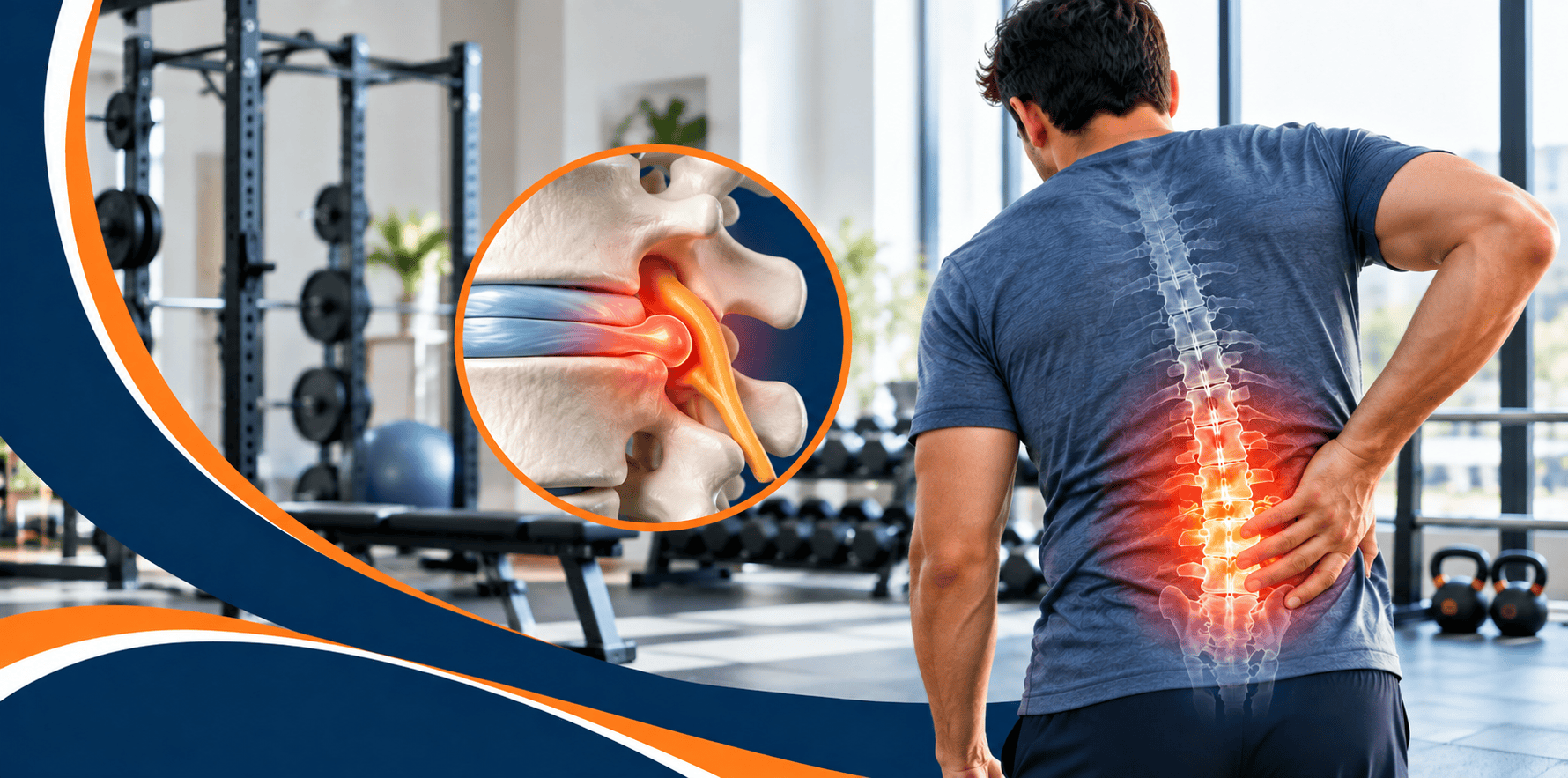
It starts as a sore lower back. A few days on, the ache moves into your buttock. Soon it's running down your thigh, maybe to your calf or foot, and sitting in a meeting feels like a punishment.
That trail of pain is a classic sign of a herniated disc. When a disc pushes against a nerve, you can get pain, tingling, numbness, or weakness.
Here's a straight look at herniated disc treatment in Alexandria, VA, from home care to surgery, plus how to know when it's time to see a spine specialist.
What Is a Herniated Disc?
Your spine is a stack of bones with a small cushion, called a disc, between each pair. A disc has a soft, jelly-like middle (the nucleus) and a tough outer shell.
Sometimes the shell weakens or cracks, and a bit of the jelly pushes out. If it lands near a nerve, that nerve gets irritated or squeezed. That's where the leg or arm symptoms come from.
Location changes the story:
- Lumbar herniation happens in the lower back. Expect pain in the back, buttock and leg.
- Cervical herniation happens in the neck. Expect pain in the neck, shoulder and arm.
Bulging vs. herniated: a bulging disc pushes outward but the shell is still whole. A herniated disc has a crack or tear, so some inner material has escaped. Bulges are very common, and plenty of people never feel them.
What Causes a Herniated Disc?
Usually it's a mix, not one event. Common contributors:
- Age. Discs dry out and get less flexible over the years.
- Lifting the same way, again and again
- Lifting badly, like twisting with a heavy load
- A sudden twist
- A physically demanding job
- An earlier spine injury
- Personal factors like genetics, body weight and activity level
Not every herniated disc has a cause you could have prevented. Some people lift carefully, stay fit, and still end up with one.
What Are the Symptoms of a Herniated Disc?
It depends on which disc is involved and whether a nerve is being bothered. You might notice:
- Lower back pain
- Neck pain
- Pain that runs into an arm or leg
- Sciatica (pain from the lower back or buttock down the leg)
- Numbness
- Tingling
- Burning or electric-shock pain
- Muscle weakness
Some herniated discs cause little or nothing. People sometimes find out about theirs only because of an MRI ordered for something else.
How Is a Herniated Disc Diagnosed?
A good spine specialist starts by asking questions, then examines you. The workup may include:
- Medical history: injuries, health conditions, what you've already tried
- Physical exam: how you stand, walk and move
- Neurological exam: a check of how your nerves are working
- Strength, reflex and sensation tests: these help pinpoint which nerve is affected
- MRI: when it makes clinical sense, since it shows discs and nerves clearly
- Other imaging: only when needed
- EMG or nerve testing: in select cases
One thing to remember: an MRI is only part of the picture. Plenty of people with zero pain show disc changes on a scan. Your symptoms and exam have to match what the image shows.
Can a Herniated Disc Heal Without Surgery?
Often, yes. Many people with a painful herniated disc get better without an operation, and sometimes the pushed-out material shrinks over time. How well this works depends on your symptoms and nerve findings.
An MRI showing a herniated disc doesn't automatically mean surgery. How you feel and function matters more than how the scan looks.
Herniated Disc Treatment Options in 2026
There's no one best treatment. Your plan should fit you. Doctors weigh things like:
- Where the disc is
- How bad your symptoms are
- Whether a nerve is involved
- How long this has been going on
- What your neurological exam shows
- What you've tried already
Your general health
Here are the main options, in the order many patients try them.
Activity Modification
For a while, you may need to back off whatever makes things worse. That could mean no heavy lifting, or standing up every half hour instead of sitting for hours.
But don't go to bed and stay there. Long bed rest generally isn't the goal. Depending on your condition, gentle movement is often encouraged.
Physical Therapy
A physical therapist builds a program around your symptoms. It often includes:
- Core strengthening
- Stretching and mobility work
Posture training - Better body mechanics for lifting and everyday tasks
- A slow, planned return to normal activity
- Exercises matched to what you can handle right now
The aim is a stronger, better-supported spine and more confidence when you move.
Medications
Doctors have several broad categories to choose from for symptom control. These include over-the-counter pain relievers, anti-inflammatory medicines, muscle relaxants, and medicines aimed at nerve pain. Sometimes a short steroid course is considered.
What's right for you depends on your health, your other medications and your symptoms. Please don't pick from this list on your own. Let a healthcare professional decide.
Epidural Steroid Injections
This is an injection of anti-inflammatory medicine near an irritated spinal nerve. Doctors may consider it when a herniated disc is causing nerve pain, like pain running into a leg or arm.
- How it works: the medicine aims to calm swelling around the nerve.
- Imaging guidance: many doctors use X-ray so the needle lands in the right spot.
- What it targets: nerve-related pain, such as sciatica from an irritated nerve root.
- Results vary: some people get relief for a while, some get little. It doesn't repair the disc.
- Not for everyone: your health, medications and symptoms all affect whether it's a good idea.
Other Interventional Pain Management Options
Some patients may be candidates for other image-guided or minimally invasive procedures. What matters is matching the procedure to the true source of the pain.
Back and leg pain can come from joints, muscles or nerves. A procedure designed for an irritated joint isn't a herniated disc treatment, and a good doctor won't present it that way.
What Are the Newer Herniated Disc Treatments in 2026?
Progress has been steady, not dramatic. It helps to separate what's proven from what's still being tested.
Established or widely used:
- Image-guided injections: better imaging means more precise placement.
- Minimally invasive spine surgery: smaller cuts and less muscle disruption for the right patients.
- Endoscopic spine surgery: done through a thin tube with a camera, and used for certain herniations.
- Modern rehabilitation: programs tailored to the person, with clearer advice on staying active.
Still emerging or investigational:
- PRP (platelet-rich plasma), stem cells and other regenerative options: these are being studied, but they are not proven cures for herniated discs. If a clinic offers them, ask what evidence supports them for your condition, what they cost, and whether insurance covers them.
New doesn't always mean better. A treatment should be chosen because it fits your anatomy and symptoms, not because it's the latest thing.
When Is Minimally Invasive Spine Surgery Considered?
Surgery may enter the conversation when good non-surgical care hasn't helped enough, or when certain nerve problems show up. Doctors look at:
- Leg or arm pain that's severe and disabling
- Significant nerve compression on imaging that matches your symptoms
- Weakness that's getting worse
- Trouble doing normal daily activities
- Symptoms that haven't improved with proper conservative care
Two procedures you may hear about:
- Microdiscectomy: the surgeon removes the piece of disc pressing on the nerve, through a small incision using a microscope.
- Endoscopic discectomy: same goal, but through an even smaller opening using a tiny camera. Only certain patients qualify.
Neither is right for everyone. Your surgeon should walk you through the benefits, risks and alternatives before you decide. Results vary, and nothing is guaranteed.
When Does a Herniated Disc Require Urgent Care?
Most herniated discs are not emergencies. A few symptoms are the exception. Get urgent medical care if you have:
- New bowel or bladder problems, like trouble urinating or loss of control
- Numbness in the saddle area (groin, genitals, inner thighs)
- Weakness that's getting worse quickly
- Major neurological changes
- Serious symptoms after significant trauma, like a fall or car crash
These can signal serious pressure on the nerves, and quick care can help protect nerve function. They're uncommon, but don't wait on them.
Herniated Disc vs. Sciatica
People mix these up, but they aren't the same.
A herniated disc is a physical problem in the spine, and a scan can show it. Sciatica is a set of symptoms: pain, tingling or numbness that follows the sciatic nerve from the lower back or buttock into the leg.
A herniated disc is a common cause of sciatica, but not the only one. Narrowing of the spinal canal can cause it too. And you can have a herniated disc without ever having sciatica.
When Should You See a Spine Specialist?
Not every twinge needs one. Think about booking a visit if:
- Pain has lasted more than a few weeks or keeps getting worse
- Pain runs into an arm or leg
You have numbness, tingling or weakness - Pain is wrecking your sleep, work or daily routine
- It keeps coming back
If you notice weakness or any of the urgent signs above, don't wait.
Conclusion
Herniated disc treatment in Alexandria, VA follows the same basic path you'd see anywhere. Most people begin with activity changes, physical therapy and medication. Injections and minimally invasive options come next if needed, and surgery is kept for cases that call for it.
A herniated disc on an MRI isn't a sentence to surgery. Your plan should follow how you feel, what your exam shows, and how you respond to care.
If back, neck, arm or leg pain isn't getting better, consider scheduling an evaluation with a qualified spine specialist. A clear diagnosis is a good place to start.
Activity Modification
Frequently Asked Questions
Can a herniated disc heal on its own?
Often the symptoms get better over time with non-surgical care, and some of the pushed-out material can shrink. How long it takes differs a lot from person to person. A specialist can tell you what's realistic for you.
Do I need surgery for a herniated disc?
Usually not at first. Many people start with activity changes, physical therapy, medication or injections. Surgery is considered when symptoms are disabling, aren't improving, or involve worsening nerve problems.
Are epidural steroid injections safe?
They're widely used and considered appropriate for selected patients, but every procedure carries some risk. Your doctor should go over your health history, explain the risks, and tell you whether an injection makes sense for you.
Are stem cells a proven treatment for herniated discs?
No. Stem cells, PRP and similar approaches are still being studied for disc problems and shouldn't be sold as proven cures. Ask about the evidence before you pay for anything.
What is the difference between a bulging disc and a herniated disc?
In a bulging disc, the outer shell stays intact while the disc pushes outward. In a herniated disc, the shell has torn and inner material has escaped. Both are common, and neither always hurts.