
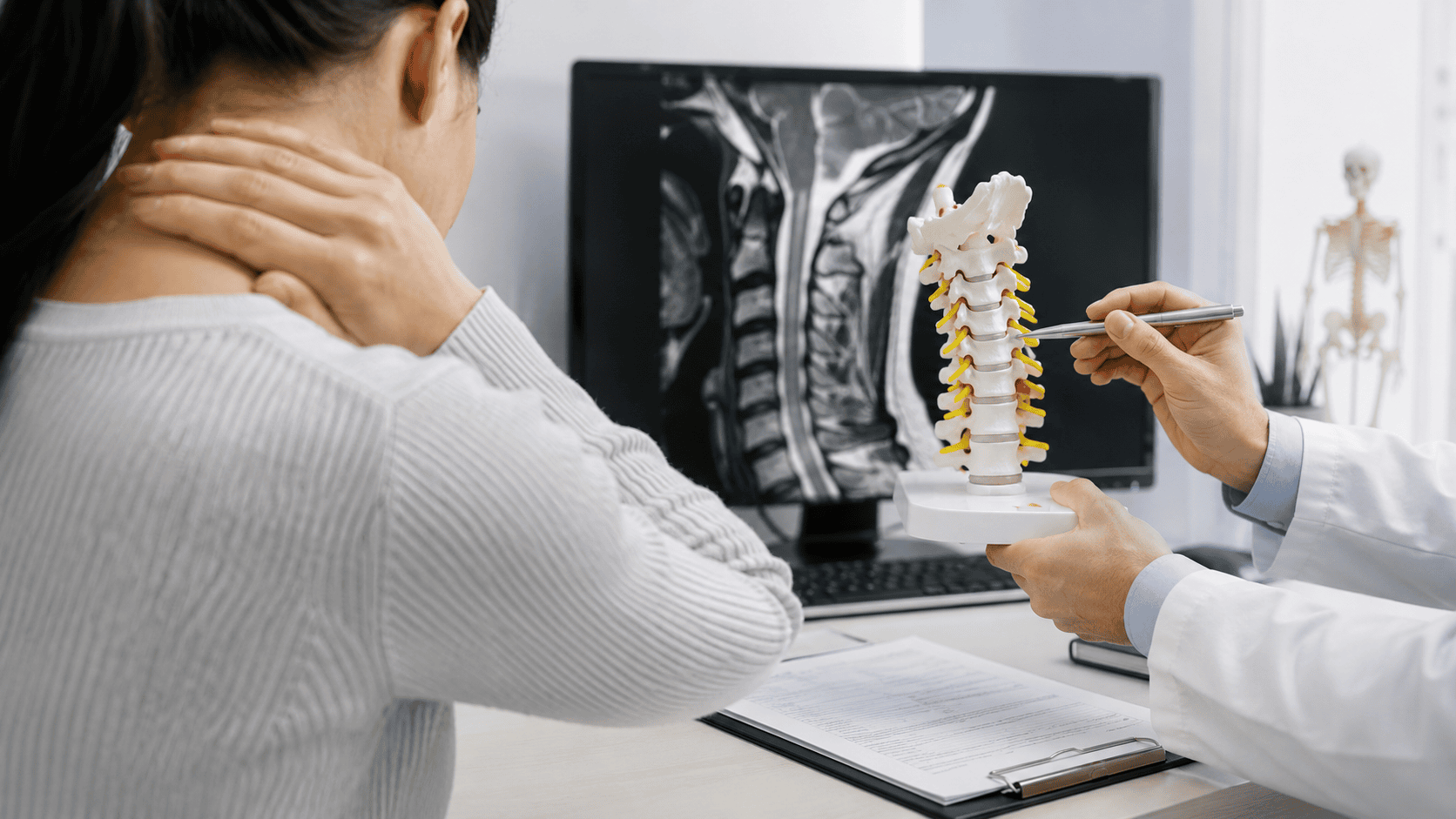
Typically, the discomfort begins mildly with a rigid neck after a tiring day and tightness between the shoulder blades. One day, you’d wake up to a different feeling: pain radiating down your arm, numbness in your fingers, or weakness in your grip. Often, that’s when people start googling “herniated disc” and wondering if surgery is now unavoidable.
It's a reasonable concern. Neck surgery can sound intimidating. However, the good news is that most herniated cervical disc cases get better on their own without an operation. This guide will detail when surgery becomes the right choice, what non-surgical care can accomplish, and why cervical surgeries today are much more manageable than most patients think.
Objective of This Blog
This blog is for anyone suffering from neck pain, pain in the arm, numbness, tingling, or weakness that’s suspected to be from a disc problem. This blog will educate you on how the herniation forms, which symptoms represent a true emergency, what conservative treatment can (and can’t) fix, and how surgical options have evolved. This lets you make an informed choice with your care team.
What's Actually Happening in a Herniated Disc
Visualize your neck as seven mini bones called cervical vertebrae that glide on discs, which act as mini shock absorbers. The outer layer of each disc is tougher than the inner layer's softer gel-like center. When the outer layer of an intervertebral disc ruptures, the gel can leak. This can put pressure on a nearby spinal nerve root or, in more severe cases, the spinal cord. That's a herniation.
People often mix this up with a "bulging" disc, but they're not quite the same thing. A bulge is more like the disc sagging outward as a whole, while the inner material stays put. A herniation is a tear, with material actually escaping, which tends to cause sharper, more specifically located symptoms because it's irritating a particular nerve.
What It Actually Feels Like
Neck pain radiating to the shoulder blade is common. So is a burning or electric-shock-type pain running down the arm; this is cervical radiculopathy, and it can be miserable even when nothing is "seriously" wrong.
Numbness or tingling in the fingers shows up a lot, too, and weakness, dropping things, and struggling to open a jar are worth paying attention to. Less common, but more concerning: clumsiness, balance issues, or trouble with fine movements like buttoning a shirt. Those can point toward the spinal cord being involved, a condition called cervical myelopathy, and it's not something to wait out.
Do I Need Surgery for a Herniated Disc in My Neck?
The answer is yes—but only in certain cases. The good news is that today's surgeries are typically small, minimally invasive procedures with a fast recovery. Most people with a cervical disc herniation improve with non-surgical treatments such as physical therapy, medication, and activity modification. Surgery is generally recommended only when the herniated disc causes significant nerve or spinal cord compression, weakness continues to worsen, hand function is declining, or symptoms fail to improve after several weeks of conservative care.
A few things should push you to call a spine specialist in Virginia sooner rather than later:
- Arm or hand weakness that seems to be getting worse
- Numbness that's spreading rather than staying put
- New trouble with balance or walking
- Loss of bladder or bowel control; this one means go to the ER, not the clinic
- Pain that hasn't moved the needle after weeks of physical therapy
Will It Just Heal on Its Own?
Sort of, and sort of not. The disc itself isn't going to knit back together the way, say, a broken bone does; that torn outer layer doesn't fully repair. But that's not the same as saying nothing improves.
In a lot of cases, the inflammation around the nerve calms down over time, and the body actually reabsorbs some of the herniated material, which takes pressure off the nerve. That's why plenty of people feel dramatically better in a few months, even though the disc, structurally, never goes back to "normal." When compression sticks around or keeps getting worse despite treatment, though, that's usually a sign the body isn't going to solve it on its own.
What Gets Tried Before Surgery
Most spine specialists start conservatively, and for good reason; it works for a lot of people. That usually means dialing back activities that aggravate things, a structured physical therapy program, anti-inflammatory or pain medication, and sometimes a cervical epidural steroid injection to quiet down an irritated nerve directly. For mild-to-moderate symptoms without progressive weakness, this combination is often enough.
The Surgical Options
Cervical ACDF (Anterior Discectomy and Fusion). This is done through a small incision at the front of the neck. The surgeon removes the damaged disc, then fuses that segment to stabilize the spine. It's been around a long time and remains a solid choice when there's significant compression.
Artificial Disc Replacement. Instead of fusing the space, this swaps in a device that lets the neck keep moving somewhat naturally. It tends to suit younger patients with a single problem level, where preserving motion is a priority.
Posterior Cervical Foraminotomy. Approached from the back of the neck, this removes bone or disc material that's pinching a nerve without fusing anything. It's a good fit for certain nerve-only compressions where the disc itself doesn't need to come out entirely.
Smaller Incisions, Genuinely Different Recovery
If your image of neck surgery involves a long recovery in a hospital bed, it's worth updating. A lot of modern cervical procedures use smaller incisions and disturb far less muscle than older techniques did, which tends to translate into less pain afterward and shorter hospital stays. Some patients go home the same day.
That said, and this matters, recovery isn't identical for everyone. Your age, general health, and exactly which procedure you have all factor in, so it's worth asking your surgeon what's realistic for your specific situation rather than assuming a one-size timeline.
What Recovery Actually Looks Like
Most people are up and moving within a day or two, though "moving" doesn't mean back to normal life. Work and driving typically come back over the following weeks, guided by how you're healing rather than a fixed calendar. Physical therapy often plays a role in rebuilding strength and motion once the initial healing is underway.
What Happens If You Wait
There's a real cost to putting off surgery when it's genuinely needed. Nerve compression that goes on too long can lead to permanent damage and weakness that doesn't fully resolve even after the pressure is relieved. If myelopathy is involved, delaying treatment can allow it to progress, and outcomes tend to be better the earlier it's addressed. This isn't meant to rush anyone into an unnecessary operation; it's just a reason not to sit on genuinely worsening symptoms.
Key Takeaways
- Most herniated discs improve without surgery.
- Surgery tends to get recommended when there's real nerve or spinal cord compression, weakness that's getting worse, or symptoms that just won't quit despite treatment.
- The disc doesn't grow back to its original shape, but the pressure it's putting on a nerve can absolutely go away.
- Injections, physical therapy, and medication are usually tried first.
- ACDF and artificial disc replacement are the two surgeries you'll hear about most.
- "Minimally invasive" isn't marketing fluff anymore; incisions are smaller, and recovery is often faster than people expect.
- Waiting too long when compression is significant carries real risk, including permanent nerve damage.
- No two recoveries look identical. Age, overall health, and the procedure you have all matter.
How Capital Spine and Pain Institute Fits In
At Capital Spine and Pain Institute, the starting point is always a real evaluation: a thorough exam paired with imaging that actually shows what's going on, not a guess. From there, treatment gets built around your situation: conservative care when that's genuinely the right call, and minimally invasive surgical options like ACDF or disc replacement when compression is significant enough to warrant it. If neck pain or symptoms from a cervical disc herniation are affecting your daily life, don't wait to get answers. Capital Spine and Pain Institute provides advanced spine care at locations in Alexandria, Falls Church, Richmond, and Tysons, VA. Call (571) 399-6340 today to schedule your consultation and learn which treatment option is right
Bottom Line
Most people with a herniated cervical disc get through it without surgery. But persistent nerve compression, worsening weakness, or any sign of spinal cord involvement changes that calculus; those are the situations where surgery tends to be the more reliable path back to function. If you're dealing with ongoing arm pain, numbness, or weakness, getting evaluated by a specialist beats guessing.